






Type something to search...

Ip之道

Insights
blog-thumb
By Peter Lin/ On 12 Jan, 2026

When Manufacturing Meets IP — How to Use the 'IP之道' Framework to Secure Your Supply Chain in China

Most foreign companies discover their China IP problem when it is already a crisis. A factory that helped them scale production starts selling a nearly identical product under a different brand. A supplier who attended their design review appears at a trade fair with a competing product. A contract that looked adequate at signing offers no practical recourse when enforced in a Chinese court. These are not accidents. They are the predictable result of treating IP as a legal formality instead of a supply chain risk. The IP之道 framework — which I describe in detail in my book of the same name — is a structured approach to thinking about IP protection before, during, and after a manufacturing engagement in China. Here is how it applies when you are sourcing or manufacturing in the country. Before you enter: Identify what you're actually protecting The first step in the IP之道 framework is to separate your IP into categories: what is patentable, what is a trade secret, what is brand equity, and what is contractual. Most founders entering China manufacturing think primarily in terms of patents. But in a supply chain context, the most practical protection is often contractual — a properly structured NNN (Non-Disclosure, Non-Use, Non-Circumvention) agreement, drafted for enforceability in China, that is signed before any manufacturing discussion begins. Chinese NNN agreements are not the same as Western NDAs. They are designed for enforcement in Chinese courts, specify liquidated damages in RMB, and include provisions targeting circumvention — the practice of a supplier going around you to reach your customers or distribution partners directly. A patent gives you theoretical rights. An NNN agreement gives you an enforceable instrument at the exact point in the relationship where most IP leakage actually occurs: the pre-production conversation. During production: Your trademark is your supply chain anchor The single most overlooked IP asset in China manufacturing is the trademark. When you register your brand in China — in Class 35 (business services) and the relevant goods class — you create a legal anchor that follows every product bearing your mark into the Chinese market. It does not matter whether that product was made by an authorised factory or a rogue one: your trademark registration gives you standing to act. Without a Chinese trademark, a factory can legally sell products bearing your brand name in China. Chinese trademark law follows a strict first-to-file principle. If you have not filed, someone else may have — and in certain industries, this is not hypothetical. The IP之道 approach treats trademark registration as an infrastructure cost, not an optional extra. File before you enter manufacturing discussions. File in every class that touches your product and your distribution. After the deal: What your manufacturing contract needs to say A well-drafted manufacturing agreement for China should address:Ownership of IP developed during production — including process improvements, tooling modifications, and any adaptations your factory makes to your specification Moulds and tooling rights if you terminate the relationship or switch suppliers Dispute resolution jurisdiction — Chinese courts, and ideally in a city near your factory's registered address Liquidated damages for IP breach — specified in RMB, with a formula calibrated to actual exposure, not Western legal conventionI have reviewed hundreds of manufacturing contracts. The ones that fail in Chinese courts are almost never the ones that were deliberately badly drafted — they are the ones copied from a US or European template and never localised for Chinese legal enforceability. The IP之道 principle: Protection before production The core principle of the IP之道 framework is straightforward: your IP protection architecture should be in place before your manufacturing relationship begins, not after you discover a problem. In practice, this means:NNN agreement signed before any samples, drawings, or technical discussions are shared Trademark filed in China before your first factory visit Patent strategy assessed (not necessarily filed) before your bill of materials goes out Contract terms localised for Chinese courts before production startsThe companies that get China supply chain IP right do not necessarily have more IP than the companies that get it wrong. They have a fundamentally different relationship with timing.If you are entering or expanding your China manufacturing relationships and want to review your IP protection posture before production begins, our team can help you put the right instruments in place. Review your China NNN and manufacturing agreements or register your trademark in China while there is still time.

Insights
blog-thumb
By Peter Lin/ On 01 Dec, 2025

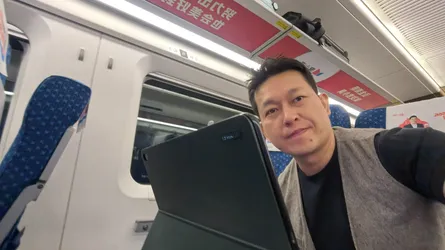
How to Protect Your Idea Quickly in China: A Personal Note from the Train

🇨🇳 Why Dual Filing Works in China A utility‑model patent covers structural or mechanical improvements and typically grants within about six months. Think of it as a quick shield. It gives you an enforceable right early, so you can show investors, partners and even Customs officials that your design is protected. Meanwhile, you simultaneously file a full invention patent, which takes longer but provides stronger, broader protection once it is granted. By starting them both together, you protect yourself at two speeds: fast and long‑term. Once the invention patent is issued, you can withdraw the utility model to avoid double. 🔍 Does it suit every innovation? This strategy shines for hardware or structural improvements—think product casings, mechanical components, new configurations or machinery. For software, algorithms or purely digital inventions, you still need to go through the standard invention patent route (which takes time), and other IP tools like copyright or trade secrets may be more appropriate. 🚀 My advice to fellow founders Don’t wait for perfection. File early, iterate quickly. In China’s “first to file” system, speed matters. Leverage the fast and slow lanes. A utility model buys you time; the invention patent keeps your protection strong for the long run. Tell your story. Investors and partners respond better when you can show that you’ve taken proactive steps to secure your IP, rather than saying “we’re working on it.” As someone who’s helped many startups navigate this path, I know first‑hand how disheartening it is to see a good idea copied simply because the filing happened too late. Don’t let that be your story. If your products touch China, your protection strategy should too. Feel free to reach out if you’d like help planning your IP filings or understanding which options best fit your product. Safe travels and safe ideas!

Insights
blog-thumb
By Peter Lin/ On 26 Nov, 2025

Why IP之道 Isn't Just a Book — It's a Blueprint for Your Brand's China Entry

📘 From Theory to Blueprint When I co-wrote IP之道, my goal wasn’t to produce another academic book on patents or trademarks. It was to explain how businesses — from startups to global brands — can build real value through IP. The book explores three essential ideas: IP as Strategy, not as Shield — Treat IP as part of your business design, not just a legal backup. From Filing to Operation — Owning rights is easy; using them to drive growth is the real skill. Cross-Border Mindset — In a globalized supply chain, your rights must move with your products. At the time, many Chinese companies were learning how to expand overseas. But in recent years, I’ve noticed the opposite need emerging — foreign companies now face serious IP challenges when manufacturing in China. Article content This realization led directly to the creation of China IP Gateway. 🌏 When Global Meets Local — The Birth of China IP Gateway In the past decade, I’ve helped hundreds of international clients protect their ideas and brands in China. Again and again, I saw the same pattern repeat itself: A European electronics brand loses its trademark to a former factory partner. A US startup’s product drawings are used for a “utility model” patent by its supplier. A global brand delays its registration, only to be blocked by Customs when exporting from Shenzhen. The problems were never just legal — they were structural. Foreign brands often had great IP portfolios abroad but no defense layer inside China. Article content That’s why I founded China IP Gateway — a platform designed to turn the principles of IP之道 into real-world protection. We connect foreign innovators with China’s IP system through: Trademark registration and defense strategies Patent filing and enforcement coordination Customs IP recordal and monitoring Integrated backend tracking system powered by OpenPTO In short, China IP Gateway is where global vision meets Chinese execution. 💡 Lessons from “IP之道” in Today’s Context Writing IP之道 taught me one powerful truth: “You can’t manage what you can’t see.” Most companies fail not because they don’t care about IP, but because they don’t map it. They treat IP as a document, not as an ecosystem. At China IP Gateway, we’ve built tools to visualize that ecosystem — to let clients see their filings, timelines, and risks in one centralized dashboard. This isn’t just about convenience; it’s about clarity. When you see how your IP connects with your supply chain, your decisions become faster, safer, and smarter. 🚀 Why It Matters Now In today’s geopolitical and commercial landscape, the gap between manufacturing in China and owning in China is widening. Factories can produce faster than ever, but legal systems move on paperwork — not promises. So if your products touch China, your brand protection must too. Otherwise, you risk being the innovator who became an imitator — not because you lacked creativity, but because you lacked registration. That’s the ultimate lesson of IP之道 — and the mission of China IP Gateway. ✳️ Final Thought When I wrote IP之道, I believed that understanding IP would help companies survive the age of innovation. But after years of working on both sides of the global supply chain, I’ve learned something deeper: IP is not just about survival — it’s about sovereignty. Your designs, your brand, your story — they deserve protection in the place where they are born, built, or shipped. That’s why we created China IP Gateway — to turn that philosophy into a system. A system where international founders can protect, monitor, and grow their intellectual assets — all from one trusted platform. If your products touch China, your IP strategy should too. Visit chinaipgateway.com to see how your brand can move from theory to defense. China IP Gateway, Peter Lin, IP之道, Intellectual Property China, Trademark Registration China, Patent Filing China, Brand Protection, OEM Risk, China Manufacturing, IP Strategy originally published in my Linkedin : https://www.linkedin.com/pulse/why-ip%E4%B9%8B%E9%81%93-isnt-just-book-its-blueprint-your-brands-china-peter-lin-usbsf/?trackingId=7czh0mfoSXS1xIHih2me1A%3D%3D